
01 · Premise
Growth becomes the stealth objective.
Steal polygons to turn a forgotten low-poly character into the protagonist. Progress appears directly in the character’s mesh.
- ApproachGet behind an NPCChoose a quiet route
- StealTake polygonsFill the polygon meter
- EvolveUpgrade the meshThree stages of visual growth
Implementation details
PolyGone was created for Ludum Dare 56. The player begins as a forgotten square with a face and an outsized ego: it wants enough visual fidelity to become the protagonist.
Progress comes from approaching NPCs from behind and stealing their polygons. Filling the polygon meter advances the character through three progressively richer meshes and turns visual evolution into the game's central reward.
02 · AI loop
Every movement choice changes how detectable you are.
NPCs combine sight, movement noise, and theft reactions. Running, walking, and crouching create different levels of risk.
These are separate detection paths, not conditions that must all pass together.

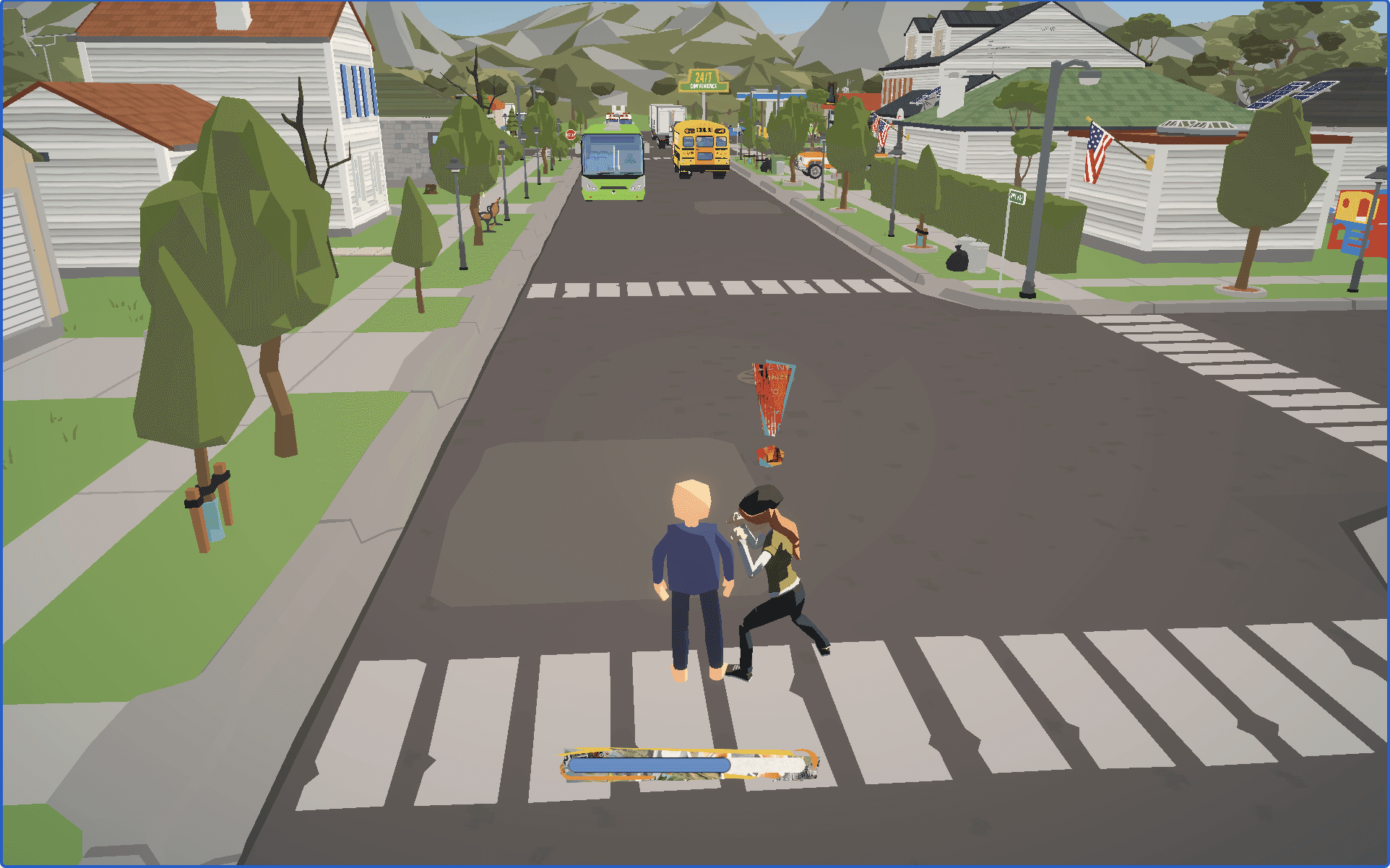
Implementation details
NPCs react to theft, vision, and sound. Running creates the largest detection radius, walking reduces it, and crouching enables a quieter approach. Raycasts and view-angle checks keep line-of-sight readable while still allowing the player to outmaneuver enemies.
- Sight combines field-of-view and unobstructed raycast checks
- Sound range responds to the player's movement state
- Detected NPCs pursue, attack, and reclaim stolen polygons
03 · Combat
A narrow parry window turns risk into faster growth.
A well-timed parry converts an enemy attack into a chance to grow faster.
- ThreatNPC attacksShort parry window in the animation
- TimingParry connectsSuccessful collision during the window
- RewardStun + bonus polygonsInterrupt the attack and grow
Implementation details
The player can parry during a short segment of an NPC attack animation. A successful collision interrupts the enemy, stuns it, and awards extra polygons—rewarding players who choose timing and proximity over a purely evasive strategy.