01 · My role
Core gameplay and the engineering that joins it together.
I engineered camera alignment, the C++ diary, and game flow; I also coordinated engineering tasks and version control.
Implementation details
I engineered the camera-alignment mechanic, the C++ diary system, and game flow. I also managed the team’s version control and coordinated how engineering work was distributed.
Players follow two brothers’ sketches and journal entries across an island, using clues to find the viewpoint where an illustration matches the environment. Successful matches change the world and open the next part of the journey.
02 · Core mechanic
Match a viewpoint to unlock a path.
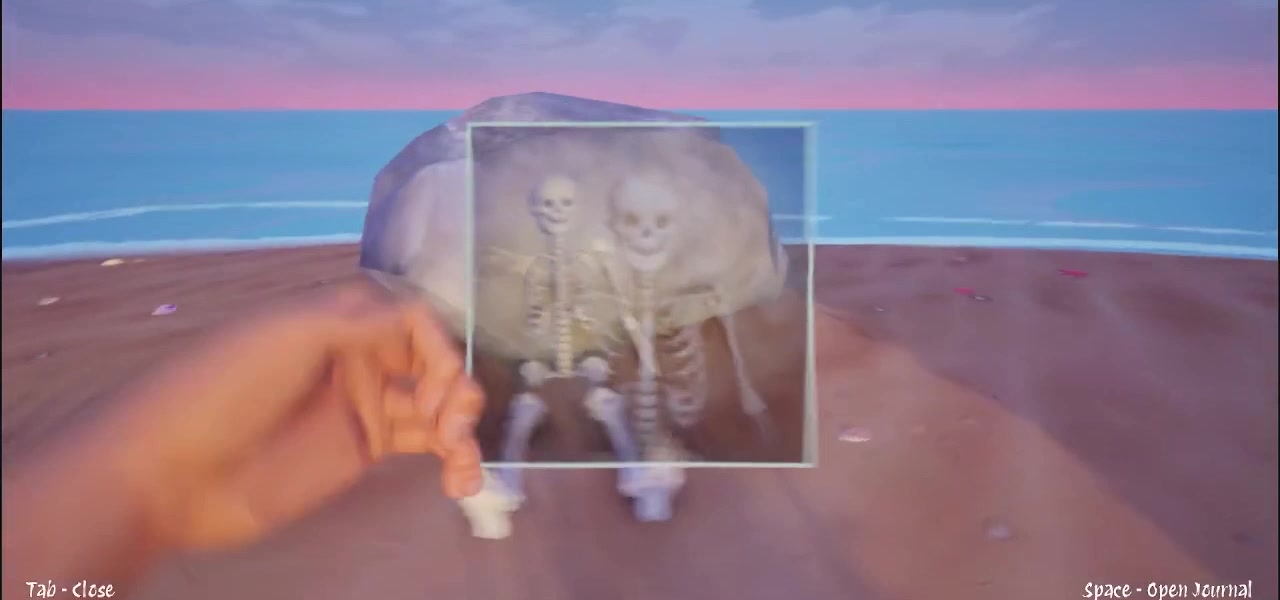
A sketch becomes a key: match its intended viewpoint to change the world.
Authored picture and camera checks drive the match.
Implementation details
The player takes a translucent sketch from the journal and aligns it with the landscape. The matching logic checks the selected picture, proximity to the target camera position, and camera orientation.
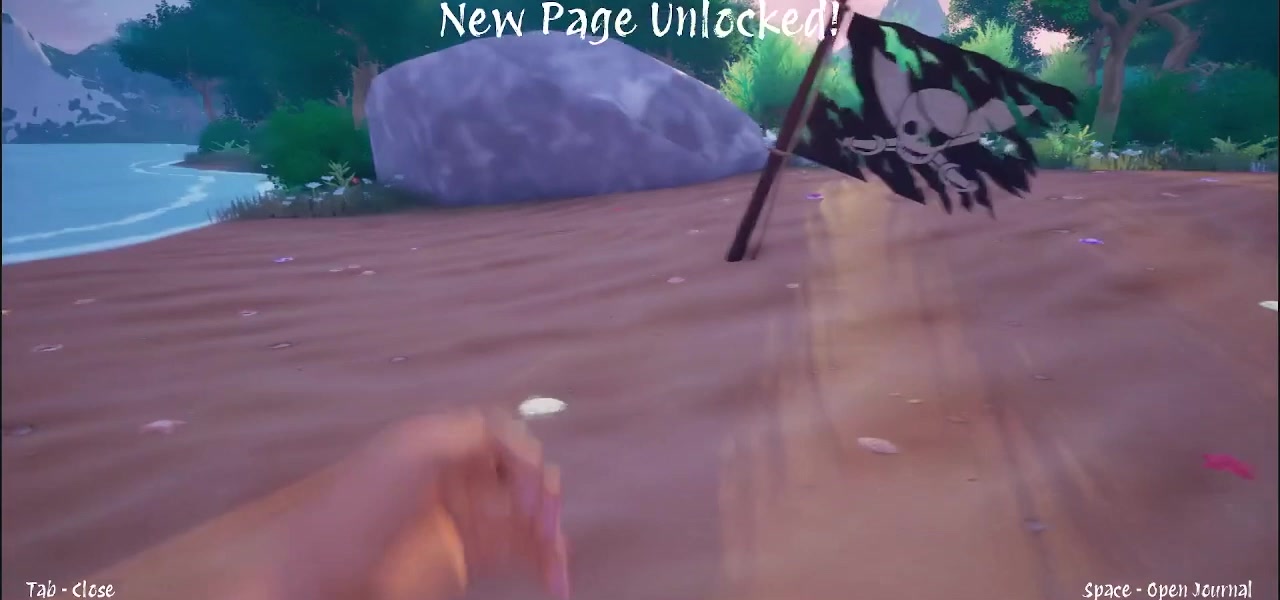
A successful match changes the puzzle state. The level flow then removes an obstacle or spawns a new object, turning a visual observation into an explicit progression event.
- Correct sketch + camera position + camera orientation
- Normal, journal, and sketch modes keep input behavior distinct
- Puzzle success drives changes in the level
03 · C++ diary
Keep clues, pages, and progression connected.
A reusable C++ JournalComponent connects authored clues with page browsing and sketch interaction.
- ContentData AssetsJournal entries + sketches
- GameplayJournalComponentC++ diary foundation
- InterfaceUMG + BlueprintsBrowse pages · select a sketch
- PlayerAlign & exploreUse the clue in the level
Normal, journal, and sketch modes keep each interaction distinct.
Implementation details
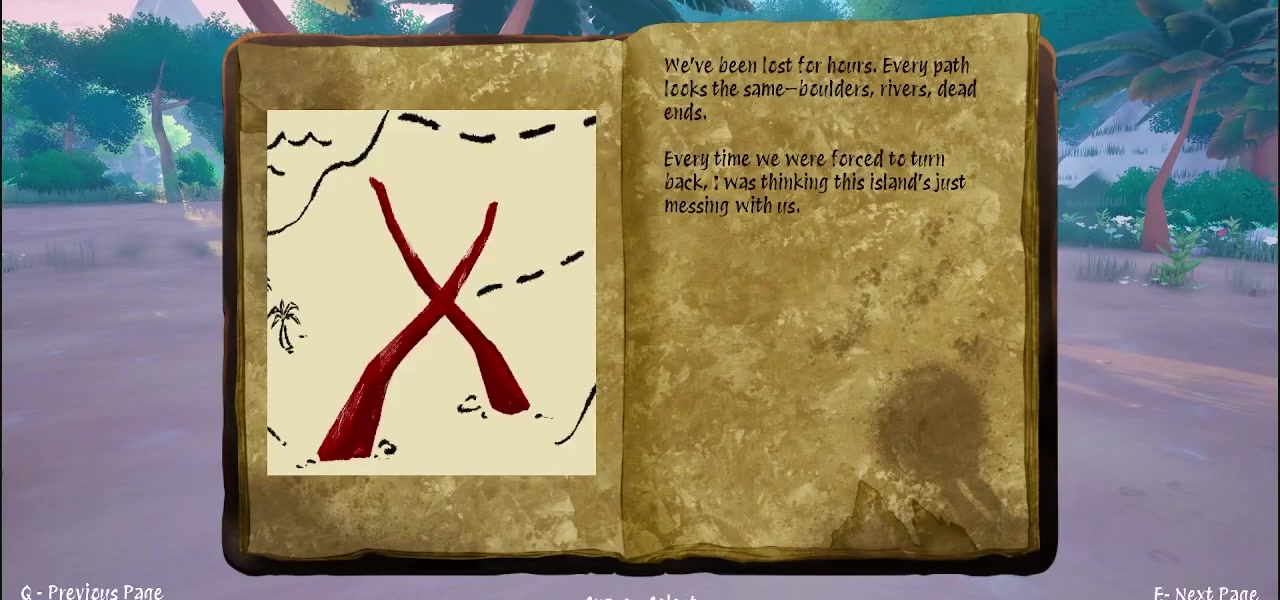
The C++ JournalComponent provides the diary’s gameplay foundation. Data Assets hold journal content, and UMG and Blueprints connect that content to page browsing, sketch selection, and the character’s interaction modes.
I engineered this diary system and the surrounding flow so a discovered clue could move from a journal page into a world puzzle. Players can open the journal, turn pages, extract a sketch, and return to exploration.
04 · Team engineering
Coordinate the work around a shared game flow.
I managed the team’s version control and engineering work distribution, connecting puzzles, diary content, and progression across three levels.
Implementation details
Alongside the gameplay implementation, I managed version control and engineering work distribution. This responsibility connected the camera mechanic, diary, puzzle objects, and level progression across the team’s work.
The result is a short exploration game whose three levels lead toward a final treasure cave, with journal clues and world changes forming one continuous loop.