01 · My role
One playable system across hardware and software.
I engineered the physical controller and hardware integration, handled game builds, and contributed to gameplay system design.
Implementation details
I was responsible for all hardware-related engineering and the game’s build engineering. My work connected the physical phone, input and output devices, and Unreal into a playable system; I also participated in gameplay engineering discussions.
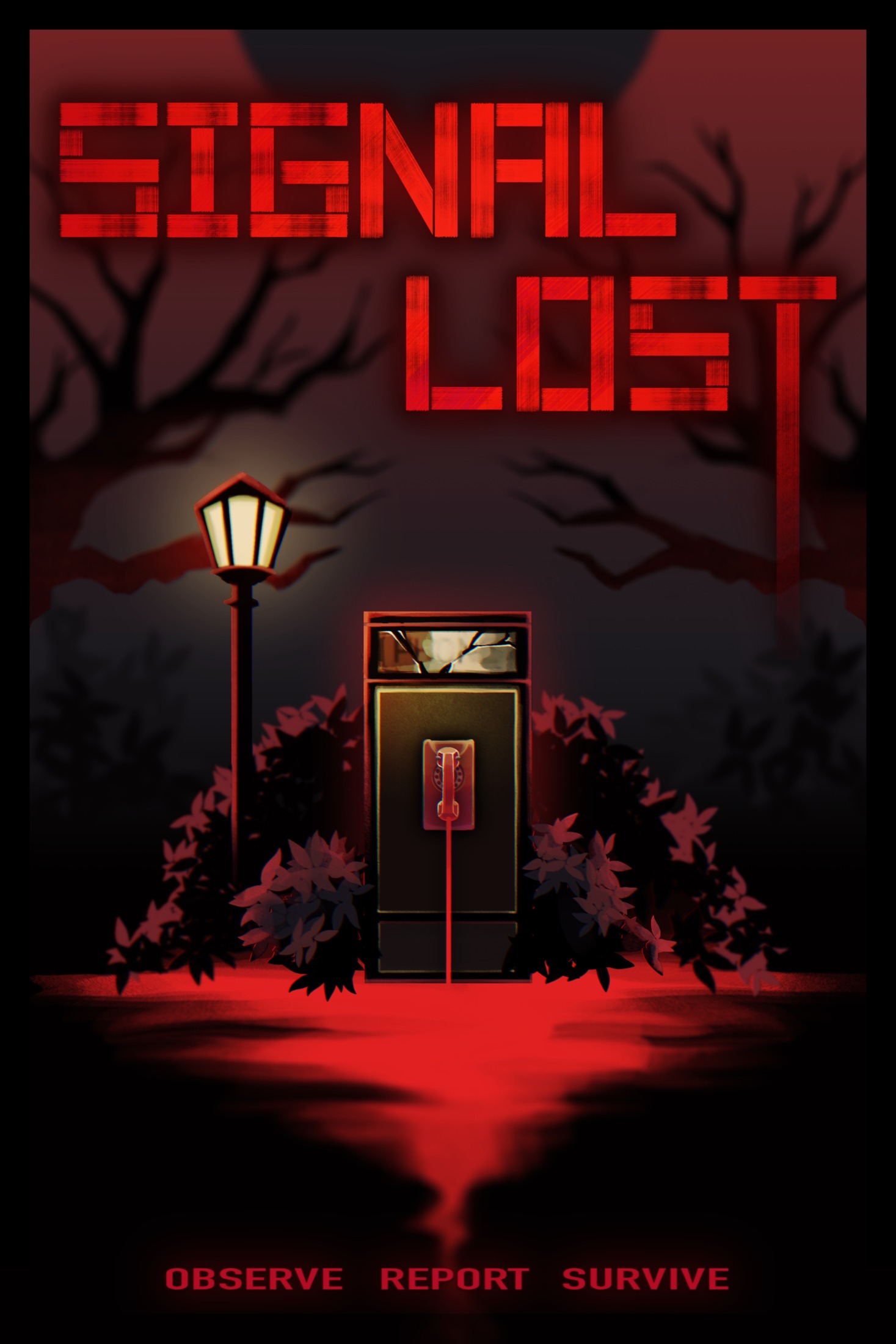
The game’s premise—observe, report, survive—makes a familiar telephone an unsettling interface. Dialing, speaking, listening, and player attention become parts of the interaction rather than separate peripherals.
- Engineered the physical controller and hardware integration
- Integrated the input, audio, and attention pipelines with Unreal
- Handled game builds and contributed to gameplay system design
02 · Controller integration
Translate the rotary dial into game input.
The rotary phone carries both input and output: dial a number, speak into the handset, and hear the game through its speaker.
Implementation details
The rotary mechanism produces electrical pulses. An ELEGOO Mega 2560 reads those pulses and sends input over USB serial to Unreal, connecting a mechanical interaction to the game’s input logic.
A microphone provides voice input to the PC, while an amplified speaker routes game audio through the telephone. The controller is both an input device and a physical audio output.
- Rotary dial → Mega 2560 → USB serial → Unreal
- Microphone → PC voice input → game interaction
- Game audio → amplifier → telephone speaker
03 · Attention & interaction
Make the player’s attention part of the interface.
A computer-vision pipeline tracks the player’s face and attention, then passes that state into Unreal.
Implementation details
The attention pipeline uses a webcam and MediaPipe in a p5.js application. A WebSocket connection forwards the result to a Python bridge, which sends attention state to Unreal through OSC.
The engineering challenge is coordinating these separate device and application paths with gameplay. My role covered hardware integration, build engineering, and system design discussions so the complete setup could function as one experience.
- Webcam → MediaPipe / p5.js → WebSocket
- Python bridge → OSC → Unreal attention state